

Tech
Keeping Tabs on Liquids: How Float and Conductivity Probes Manage Your Fluid Levels

Whether it's managing a water tower, controlling a sump pump, or keeping industrial processes running smoothly, accurately monitoring liquid levels in tanks and vessels is crucial. Two of the most common and reliable methods for this task are float switches and conductivity probes. While they operate on different principles, both offer simple, dependable "point level" detection, and sometimes, they even team up!
The Mechanical Sentinel: How Float Switches Work
A float switch is essentially a mechanical switch actuated by the buoyancy of a liquid. It's an elegant solution based on a simple, timeless principle: what floats goes up.
The Anatomy and Operation
A typical float switch system for point level detection consists of three main components:
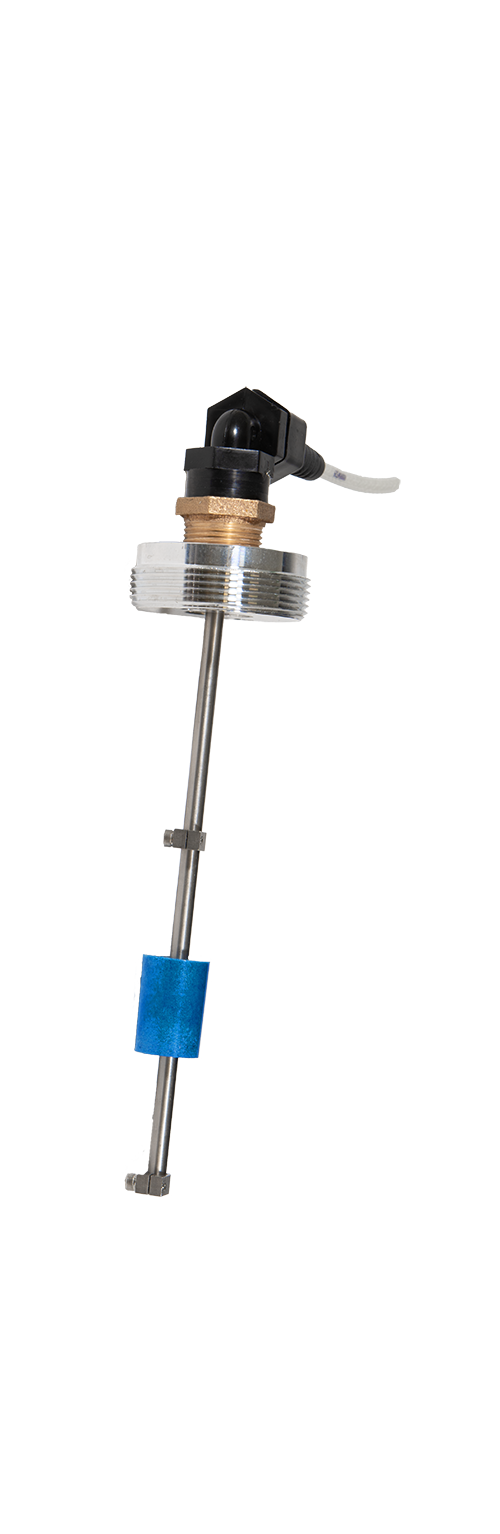
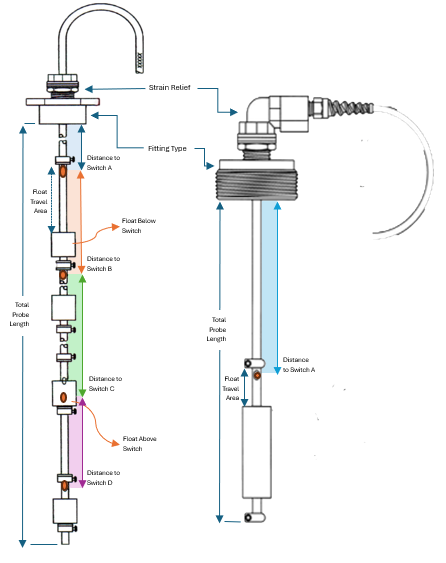
- The Buoyant Float: This is a float material object (or stainless steel) that rests on a collar and contains a magnet.
- The Stem/Guide: This is a fixed rod or tube that the float moves up and down on.
- The Reed Switch: This tiny, sealed electrical switch is mounted inside the non-magnetic stem, positioned at the specific level you want to detect.
How it works:
- As the liquid level rises, the buoyant float moves up the stem.
- When the float's internal magnet aligns with the reed switch inside the stem, the magnetic field causes the flexible metal contacts within the reed switch to pull together and close the circuit. An alternative configuration would be where the reed switch may separate to open the circuit.
- This closing of the circuit sends an electrical signal to your control system (like a pump controller or an alarm).
- Conversely, as the liquid level falls, the magnet moves away from the reed switch, the contacts spring apart, and the circuit opens.
Float switches are highly reliable, offer great versatility for different liquids (including non-conductive ones like oil), and can be configured as either Normally Open (NO, circuit closes on high level) or Normally Closed (NC, circuit opens on high level) depending on your application.
The Electrical Contact: How Conductivity Probes Work
Conductivity-type level probes, often called conductive or floatless probes, are a simple and robust solution for detecting the level of electrically conductive liquids, such as water. Unlike float switches, they have no moving parts.
The Anatomy and Operation
A conductivity level system requires two main parts: the probe assembly and an electronic controller/relay.
- The Electrodes: The probe assembly consists of one or more metal rods (electrodes) of varying lengths, inserted into the tank. One of these is the reference or common electrode (often the longest one).
- The Controller/Relay: This unit applies a low-voltage, alternating current (AC) across the electrodes and measures the electrical resistance.
How it works:
- An electrical circuit is established between the reference electrode and the shorter sensing electrode, but it's an open circuit when the liquid level is below the tip of the sensing electrode.
- As the level rises and the conductive liquid makes contact with both the sensing electrode and the reference electrode, the liquid completes the electrical path.
- The closing of this low-voltage circuit is detected by the electronic controller.
- This detection triggers the controller's internal relay, which then sends a signal to start/stop a pump or activate an alarm.
The key limitation is right in the name: the liquid must be conductive for the circuit to close. They are, however, ideal for applications involving dirty, turbulent, or foaming liquids where moving parts in a float switch might fail.
The Best of Both Worlds: Combined Float and Conductivity Probes
In some applications, it can be advantageous to use both technologies in a single device or system. The term "combined probe" can refer to a couple of different setups:
Hybrid Measuring Devices
Another combination exists in advanced level transmitters. For instance, a device might use a continuous magnetic float system (where the float moves on a stem to provide an analog signal of the entire liquid level) and also incorporate a conductivity switch for a separate, redundant point-level alarm, such as an overflow protection limit.
By combining the strengths of mechanical buoyancy and electrical conductivity, engineers can design more robust, redundant, and feature-rich systems for sophisticated fluid management. This blend of simple physics and electronics ensures that no matter the application—from the cleanest water to the toughest industrial sludge—your liquid levels are accurately and reliably monitored.
Ready to add point-level detection to your tank or process?
See specs for Geotech's float switches and conductivity-style level control probes, or talk to an applications specialist about your setup.