
Tech
Advanced Characterization of Groundwater Flow Using the Colloidal Borescope
Implications for Environmental Management

Groundwater flow characterization and preferential flow zone identification are essential for effective groundwater management and contamination control. Traditional hydraulic testing methods have limitations in accurately capturing in situ conditions of aquifer flows. The Colloidal Borescope, integrated with the latest version of AquaLite software, represents a significant advancement in groundwater assessment technology. This paper evaluates the equipment's performance in providing accurate measurements of groundwater velocity and directional flow, which is crucial for real-time monitoring, modeling complex fracture zones, and improving remediation strategies.
Introduction
Groundwater flow velocity and preferential flow zones are pivotal parameters in hydrogeology that influence water resource management, pollution mitigation, and remediation efficiencies. Conventional methods of characterizing these parameters often fall short in accuracy or involve extensive labor and time. Geotech's newly released Colloidal Borescope with AquaLite software promises to streamline the process, offering precise and real-time groundwater velocity measurements and preferential flow identification.
Methodology
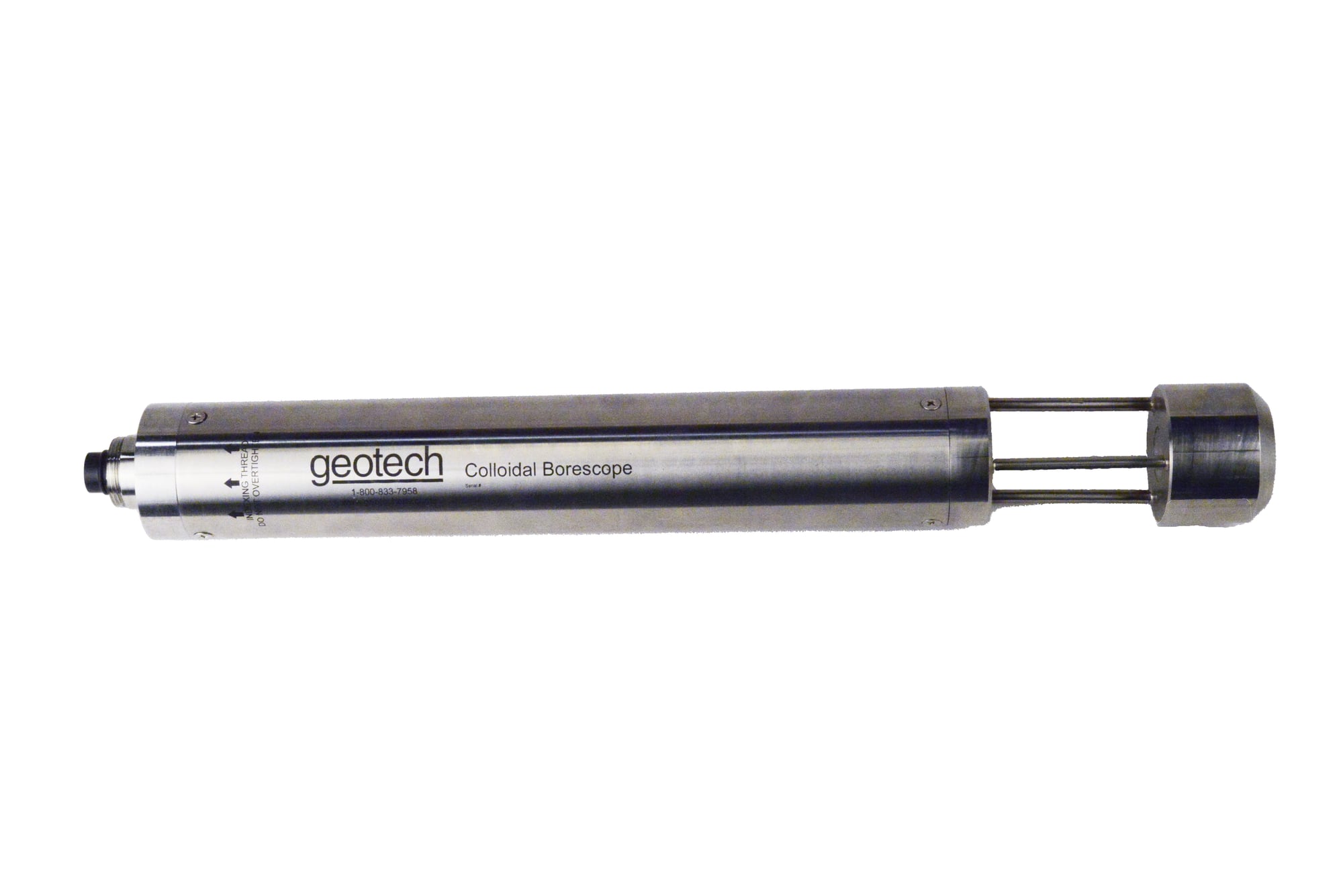
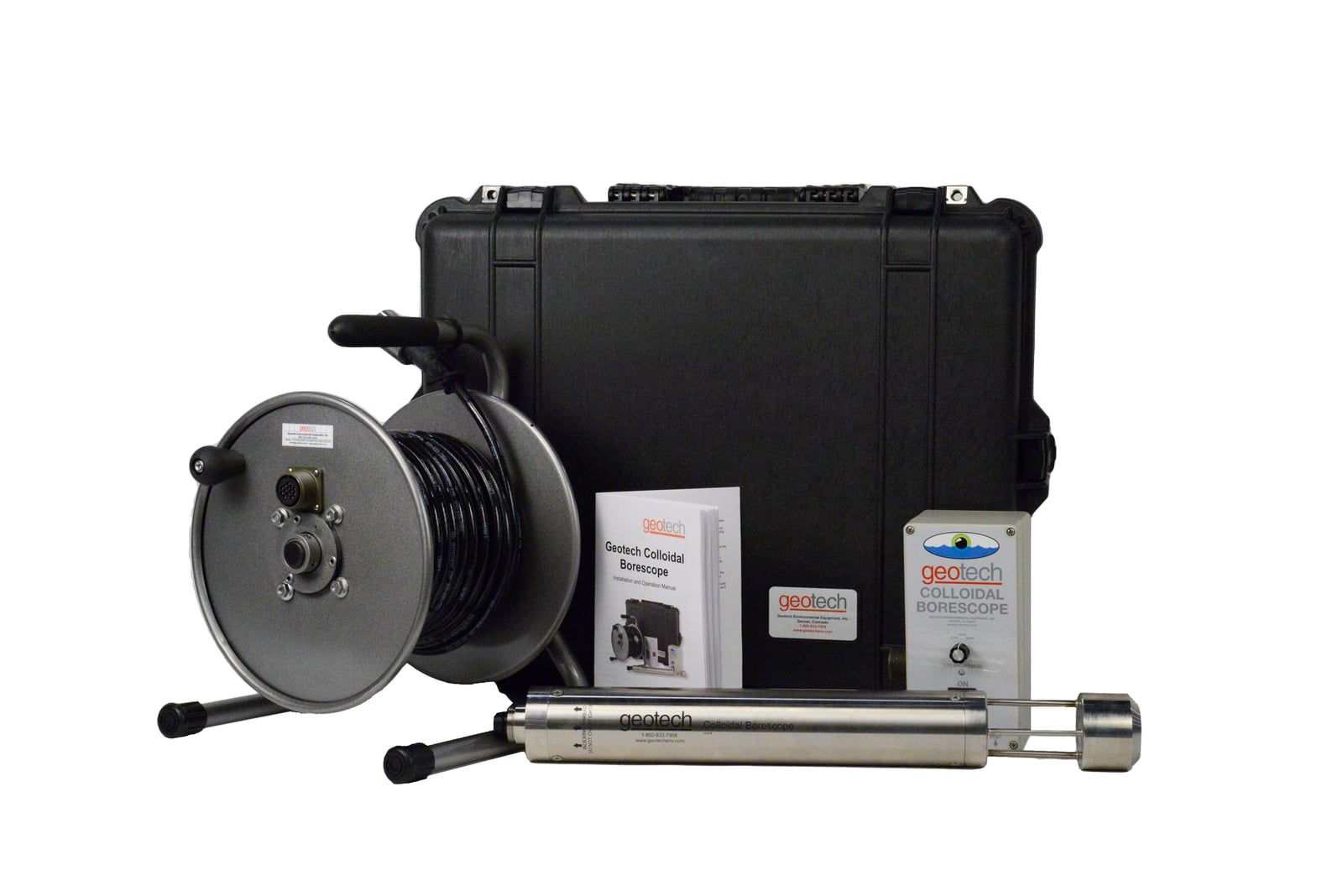
The Colloidal Borescope operates on the principle of particle movement detection within the groundwater. Equipped with a high-resolution sensor and illumination source, it magnifies the subsurface environment and utilizes advanced frame rate technology to track and count particles, determining their speed and direction more accurately than former methods.
In Situ Measurement Advantages: Unlike traditional testing that requires groundwater extraction, the Colloidal Borescope's in-situ measurement ensures no disturbance to the natural flow, yielding more reliable data on aquifer flow rates and directions.
Real-Time Monitoring and Modeling
By applying a frame rate of 30 frames per second, the device can detect minute movements, such as a particle moving 1mm across the field of view, allowing for granular velocity measurements—up to 3cm/s in this instance. When combined with AquaLite software, these measurements facilitate real-time analysis and decision-making.
Applications of Real-Time Data: The ability to monitor contamination migration in real-time and model flow characteristics within complex fracture zones stands to significantly improve environmental management practices. By defining preferential flows across well screens during low-flow sampling, stakeholders can efficiently strategize remediation or water treatment designs.
Advancements over Traditional Methods
The detailed observation of particle movement within a monitoring well provided by the Colloidal Borescope surpasses older methodologies that relied heavily on indirect measures or laborious sampling procedures. This new system provides direct, continuous observation and recording of groundwater flows.
Implications for Environmental Equipment and Supplies
The Colloidal Borescope signifies a leap forward for performance-driven environmental equipment. The enhanced capacity to gauge subsurface flow regimes informs better supply and design choices for environmental engineers and geoscientists.
Product Resources:
Conclusion
The integration of the Colloidal Borescope with AquaLite software marks a new era in groundwater investigation, offering a sophisticated yet user-friendly approach to characterizing groundwater flow velocities and identifying preferential flow zones. Environmental professionals interested in utilizing this technology for monitoring and remediation purposes can access further resources or consult with a product specialist at Geotech.
See the Colloidal Borescope in action
Get specs and the manual for the Geotech Colloidal Borescope with AquaLite software.