
Applications
Borehole Inspections
How Cameras are Useful for Pre and Post Frac Perforation Measuring

This article will aim to provide the benefits of using a down well camera to measure the pre and post frac perforation. A brief overview of Hydraulic fracturing will be provided as well as some other methods that may be used to measure these fractures or perforations. Overall, we will discuss why a down well camera is a great tool to use for this application.
Brief Overview of Hydraulic Fracturing:
Hydraulic fracturing, commonly known as fracking, is the process of injecting water, sand, and/or chemicals into a well to break up underground bedrock to free up oil or gas reserves. The USGS monitors the environmental impact of this practice across the country, from potential earthquakes to degraded groundwater quality.
Reference: USGS — Hydraulic Fracturing
Overall, this is performed to enhance the productivity of oil and gas wells. Previously tight rock formations where hydrocarbons were trapped can now be opened due to the fractures created with this method, therefore allowing us more access to larger quantities of oil.
Perforation:
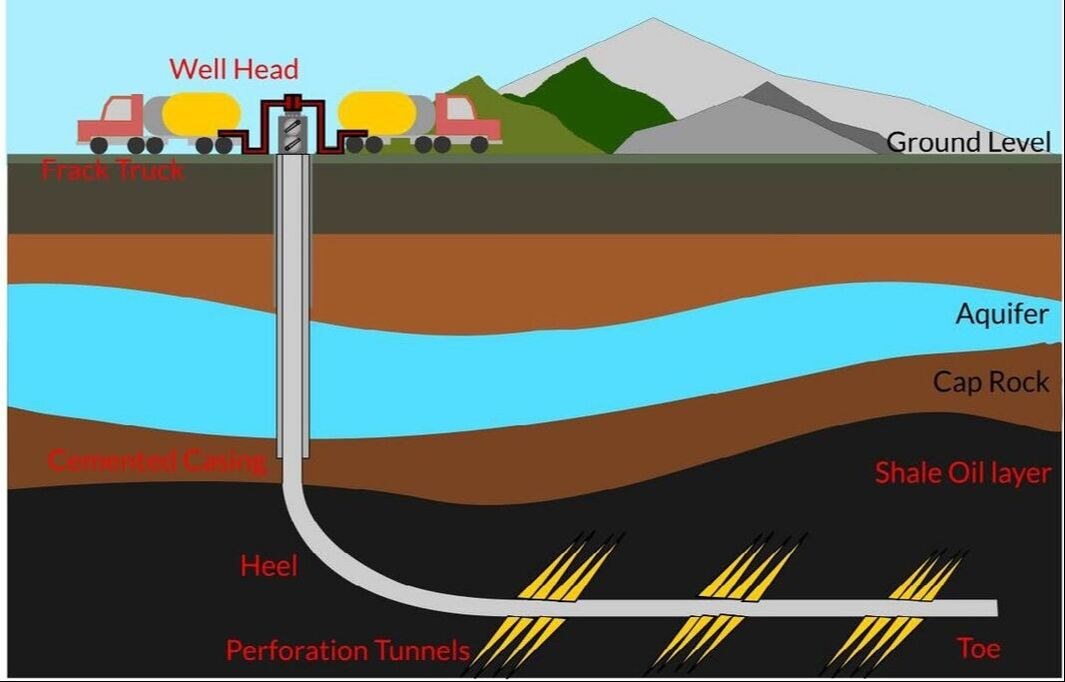
As mentioned earlier, the tight rock formations that contain trapped hydrocarbons are often referred to as perforations. These perforations act as small pockets that hold valuable resources such as oil. The purpose of hydraulic fracturing is to create connections between these perforations, enabling a higher flow of hydrocarbons into the wellbore. The casing must be perforated as well to allow the flow of hydrocarbons into the well, this can be done using a perforation gun.
Brief Mention of Other Methods:
There are various methods used to measure fractures and perforations in oil and gas wells. Traditional techniques include well logging, pressure testing, and production analysis. While these methods have been effective to some extent, they often have limitations in terms of accuracy and efficiency.
Why Down Well Cameras?
Now for the main event, why are down well cameras a better option?
- Real-time Visual Inspection: Down well cameras provide direct visual access to the wellbore, allowing operators to inspect the fractures and perforations in real-time. This live feed of downhole conditions offers valuable insights into the effectiveness of the hydraulic fracturing process and helps identify any potential issues.
- Accurate Measurement: By capturing high-resolution images and videos, down well cameras enable precise measurement of fractures and perforations. Operators can analyze the size, shape, and distribution of the fractures, allowing for a comprehensive evaluation of the fracturing effectiveness.
- Non-Intrusive Technique: Unlike certain measurement methods that require physical intrusion into the wellbore, down well cameras can be deployed remotely without disturbing the ongoing operations. This non-intrusive nature minimizes operational disruptions and enhances safety during the inspection process.
- Cost-Effective Solution: Down well cameras offer a cost-effective alternative to traditional measurement techniques. By providing accurate data in real-time, operators can make informed decisions regarding well stimulation strategies, reducing the need for costly trial-and-error approaches.
Conclusion:
Down well cameras have revolutionized the measurement of pre- and post-frac perforations in the oil and gas industry. By providing real-time visual inspections, accurate measurements, non-intrusive deployment, and cost-effective solutions, these advanced imaging devices have become an invaluable tool for optimizing hydraulic fracturing operations.
Questions? Reach out at sales@geotechenv.com.
Need a borehole camera for frac inspection?
Talk to a Geotech applications specialist about down well camera options for your well intervention program.